
Good Challenges, Bad Challenges
You gotta dig deep!

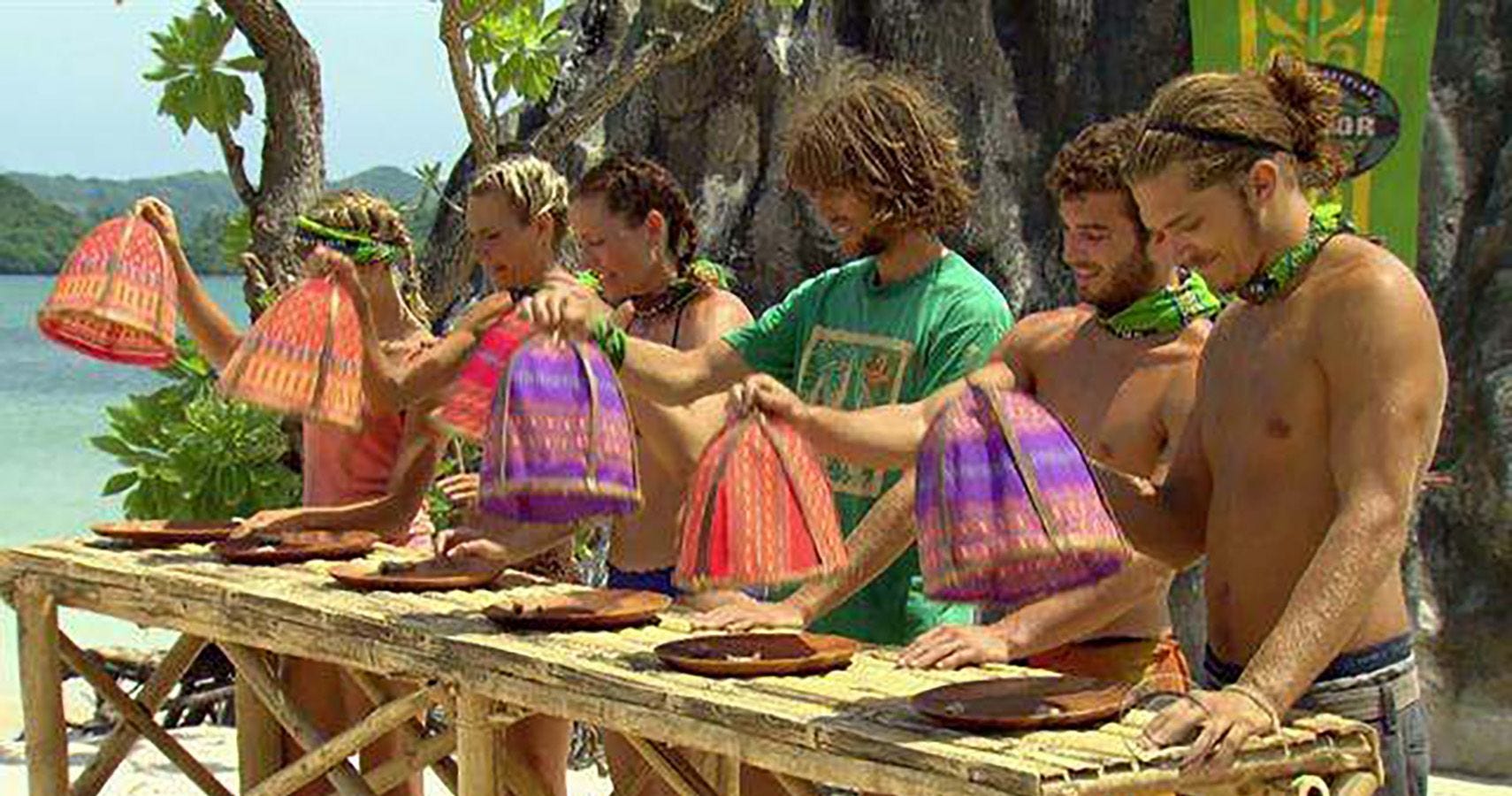
Last time we talked about the key role challenges play in reality shows – acting as a dice-roll, disrupting relationships and power dynamics, and ideally offering opportunities to reveal more about the players and raise their stakes.
But what makes a good challenge?
It gives new information to the players
It engages the viewer by allowing them to make and shift predictions
It changes the stakes and the power dynamics of the game
It reinforces the theme
It involves the host’s performance
The Good
Good challenges have a relationship to the theme of the game. They engage the viewer and allow them to make predictions and speculations, and importantly, they give new information or tools to the contestants that change how they will play.
To this day, one of my favorites is an old Survivor game where the contestants are simply made to maintain a difficult position for as long as possible, often balancing on a narrow pylon or similar. The last contestant to step down wins immunity, which means they can’t be eliminated in the next vote.
Except this challenge usually takes place in the game’s mid to late stages, when alliances and elimination plans are fraught, and the contestants are beginning to feel exhausted by the show’s fictional challenge of “surviving” in a jungle on limited food resources. Survivor reinforces its theme with many challenges where physical strength and stamina are a factor, and those who are better-fed tend to have an automatic advantage. Food itself is often core to gameplay on Survivor, as one expects.
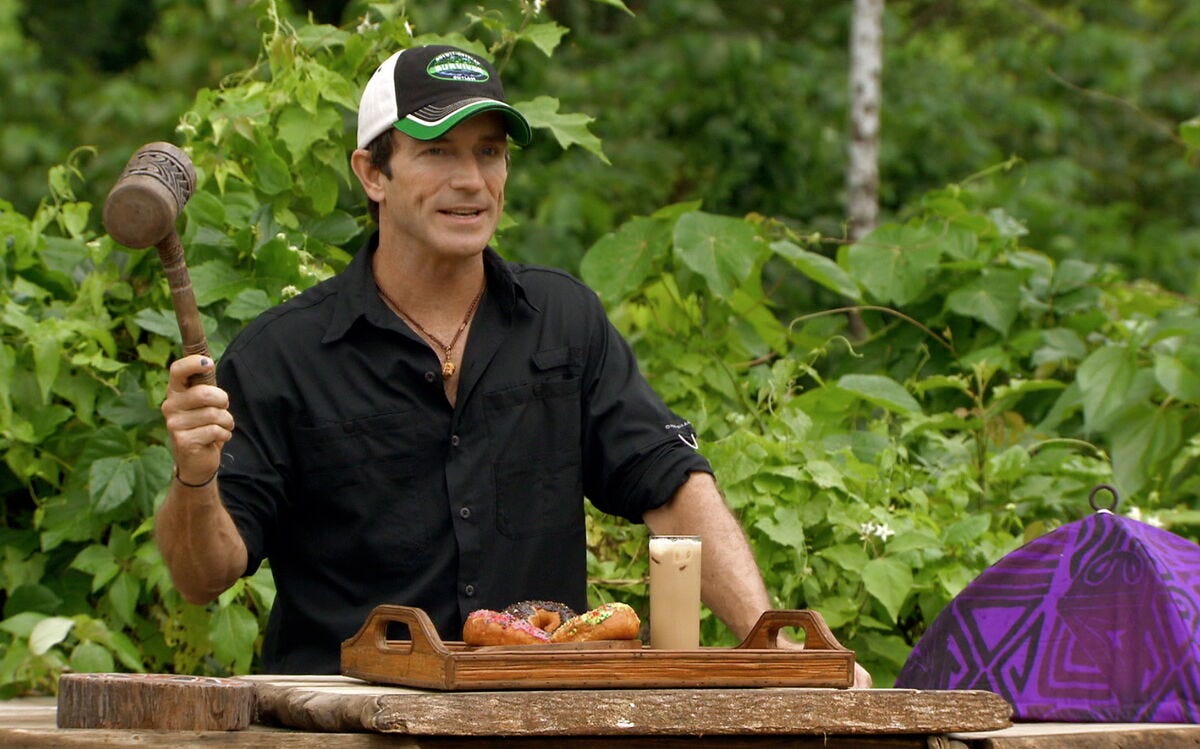
This challenge, called Temptation, owes a lot of its thrills to the behavior of host Jeff Probst. While contestants maintain their precarious positions, Jeff smugly strolls out offering various food items one at a time, ranging from a little bit of peanut butter or a pint of beer to a full burger and fries, some for strategic nutrition and others for pleasure. With each offering, contestants have to evaluate whether their desire, even their strategic need, for a food item is worth sacrificing immunity and making themselves vulnerable.
All the while, Jeff Probst takes lavish sips and bites of things, emphasizing how enjoyable they must be – it’s great theater that allows the host to act as an all-knowing antagonist (the role of Hosts is a topic for the future!), while also asking contestants to balance both short and long-term strategic priorities.
Most crucial for a challenge, it’s eminently watchable, allowing viewers to make predictions about who will crack first and why. It also lets them put themselves in the contestants’ shoes – if you were stranded on an island, would you be more desperate for a beer or an ice cream? Is it a good idea for the guy who’s been puking water for three days straight to eat a whole steak dinner? Shouldn’t you just go for the protein bar?
I haven’t watched Survivor in many years, so I don’t know if they do this one any more. I get the impression that nobody is genuinely in danger of starving any more like in the early seasons, so maybe it hits different. Pity…
The Bad
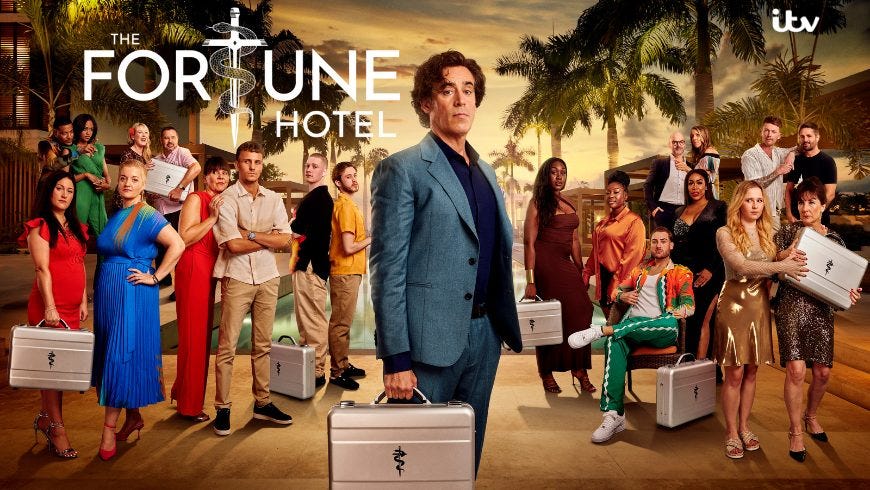
There are now so many exciting new reality shows out there with bad challenges. ITV’s new program Fortune Hotel sounded so promising – pairs of contestants consigned to a luxury location where they each get a briefcase. One briefcase contains £250,000, and all the rest of them plain paper, except for the one containing a “checkout card” that eliminates you. Contestants use social strategy to ‘follow the money’, avoid being stuck with the checkout card, and be the one holding the big prize case at the end.
“Deal or No Deal via White Lotus” sounds like a good premise, right? In Fortune Hotel, challenges mostly determine who has the power of choice when it comes to swapping their briefcase with someone else’s. To make strategic swaps, you have to have good hypotheses about what others are carrying, and also the ability to suss out who you can and can’t trust.
But the challenges are pointless relay races, scavenger hunts and guessing games that only loosely nod to the luxury theme (“guess the ingredients of this cocktail”, “find all the landmarks”). Worse, they do nothing to give players any information that should inform their strategy or shift their power dynamics.
Tabletop hidden role games (Werewolf, The Resistance et al) are almost entirely negotiation and social strategy among players who are hiding different pieces of information from each other, and must manage trust against advancing rules and circumstances. I wish the show designers would play some of these, and implement challenges more relevant to relationship trust and hidden info. Betting and prediction games about the outcomes of the case reveal could also complement the high-rollers theme of the show, and add additional conditions for players to try for each week.
BBC’s UK version of The Traitors is one of the most promising new reality brands in some years – great theme and setting, great narrative design, and character-driven hosting by the iconic Claudia Winkelman. But ultimately the only “game” to The Traitors is judging your fellow contestants’ body language, words and behavior and deciding by majority vote to accuse the person you agree is most suspicious.
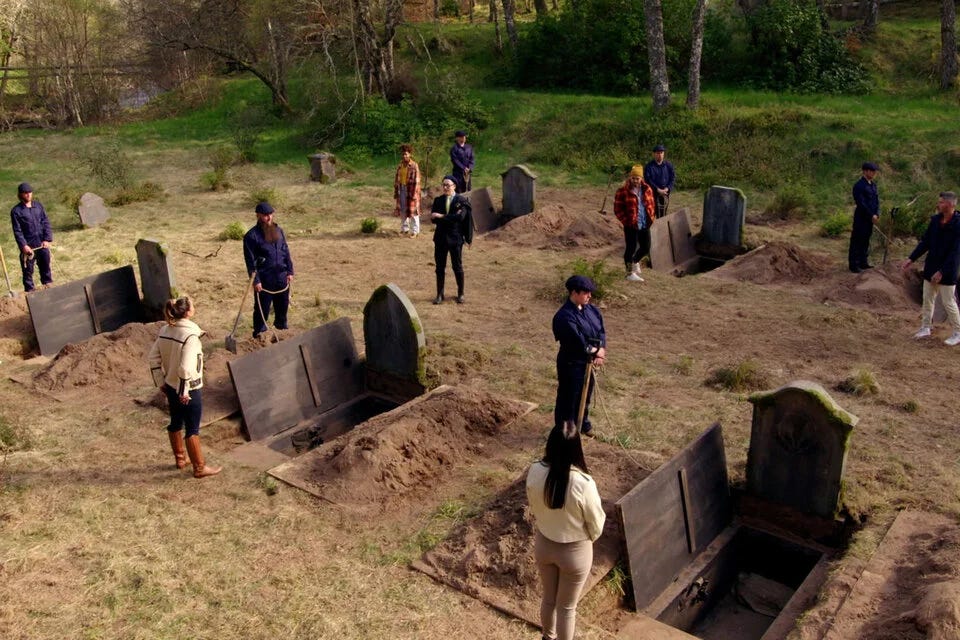
Why, then, do we spend so much of each show watching them run around in the woods trying to answer quiz questions about Scotland or whatever? None of the games on the Traitors are about truth or trustworthiness, and therefore playing the games together gives contestants zero new info to play with. Is it truly necessary to bury people alive?
Nor do we as viewers learn or experience anything about the characters or their alliances. The only game element determined by the challenges is the size of the prize pot, which I think is a bad idea on the part of the showrunners – if the cast does poorly at a challenge and loses money, doesn’t that just lower the stakes for winning?
The Faithfuls and the Traitors are competing for the same prize pot, but when I watch them play games over small increases in money, I keep forgetting I’m not watching The Mole – where the same kinds of challenges become Good, because one contestant is always trying to throw the challenge for the others without being noticed, and therefore it’s watchable to the viewer, and an opportunity for new information for the contestants.
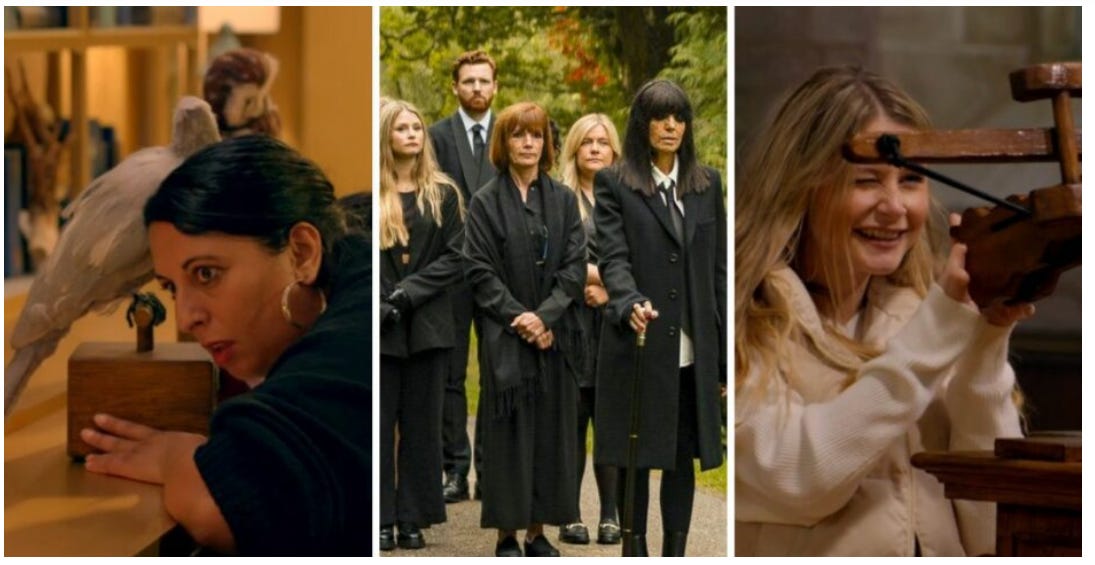
The Traitors should offer a single high-value fixed prize, and the games should reveal how bad everyone wants it and why. Contestants should have to appeal to each other’s emotions, earn trust and try to catch each other in lies that might affect how they decide to vote in the evening.
The Ugly
A high number of reality shows still think it’s 2005, and subject their contestants to gross or humiliating circumstances. I keep picking on Rise and Fall, but it’s such a big offender – not only were the challenges useless to the game, but a lot of times they were disgusting, making contestants gather bushels of live pests or rummage through fetid garbage as they tried not to vomit. At one point, they endured electric shocks.

Perhaps in the early days of reality shows, we watched to see those who dared seek fame and fortune on television be humbled? But there’s just absolutely no reason for gross-out challenges to exist today – grueling to the participants, vulgar to the viewers, useless to the game. I mean, unless we’re talking Fear Factor where the whole point is seeing what you can endure, the people who are still putting these challenges on shows today really need to get with the times.
Some challenges are simply diabolical. On Married at First Sight, couples are asked to put photos of the other brides and grooms in order of their sexual attractiveness, which inevitably causes a fight when the couples do not put one another’s photos first. On Love Island, contestants of one gender are hooked up to “heart rate monitors” (supposedly) while contestants of the other gender give them scantily-clad lap dances. Then you get to find out who made your partner’s pulse quicken the most. Imagine!
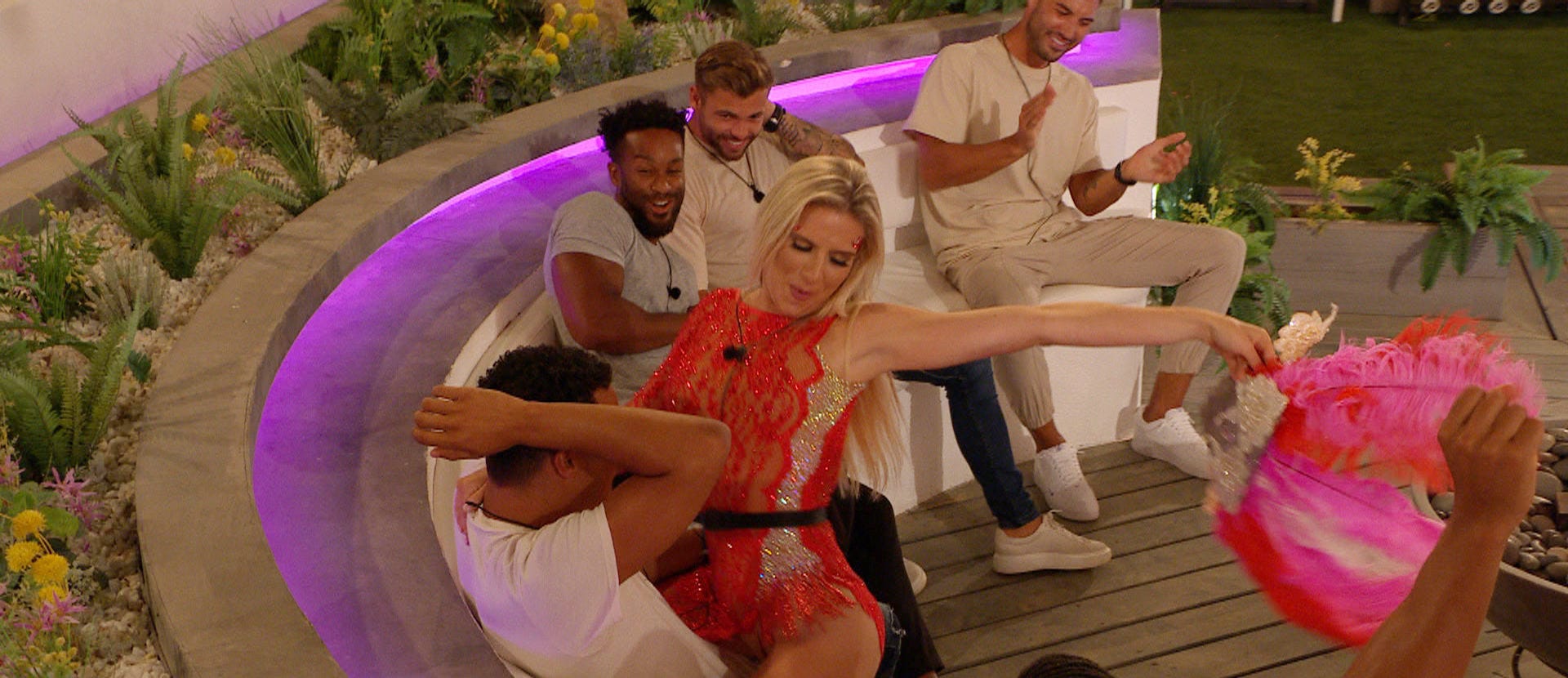
Of course, by some definitions, these are “good” challenges, in that they reliably cause drama, but they also raise questions about what it’s ethical to put people through. Love Island used to have a challenge called “Mean Tweets” where they showed contestants tweets from viewers commenting on their relationships – with the names removed, so that the whole group could guess who each one was about. Pretty harsh for a show that has multiple suicides associated with it.
You’ll notice Jeff Probst and Claudia Winkelman got shout-outs here for their hosting. The role of the host is a fascinating and under-explored element of reality shows that we’ll get into next time. Any more thoughts on challenges? Got a favorite host? Please comment!
As always, your pledges are warmly appreciated, but the best thing you can do if you’re enjoying this series is to subscribe and to share it. Thanks!